Blog
Managing the intersecting worlds of work on a global scale
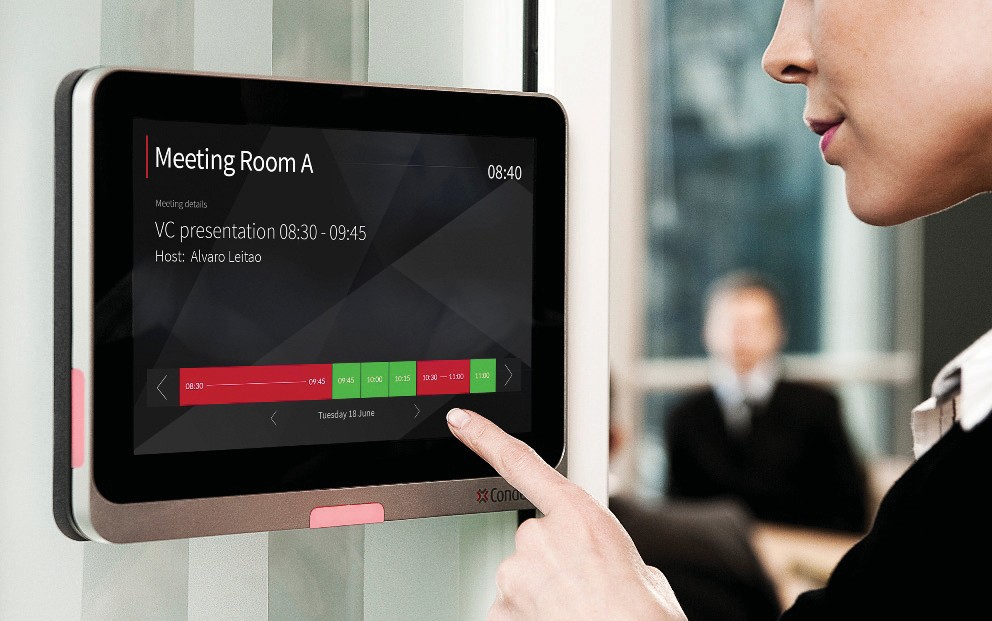

The converging worlds of technology, corporate real estate, of ce design, human resources and facilities management are an inevitable and solution driven response to the growth of agile working practices.
By Paul Statham
Edition 5 – May 2015 Pages 14-17
Tags: corporate real estate • facilities management
Firms have always had concerns about the efficient use of their offices,and for good reason.After staff,real estate is their most expensive and valuable asset.Twenty or more years ago, before the Internet began to unravel the bonds that tied us full time to the workplace,this was a fairly straightforward issue. Up until the mid 1990s,most people had fixed hours in one place of work and a dedicated workstation,the size of which was often determined by their status within the organisation rather than anything else. Even those workers who spent large amounts of time away from the office usually had their own desk to call home.
In the mid 1990s,that started to change. Not only did the uptake of the Internet and the adoption of mobile phones and laptops allow staff to work from anywhere,there was growing awareness of exactly how they used space within the office
itself. Pioneers such as Frank
Duffy and his firm DEGW
began to measure how much
time people spent at their
desks over the course of the day
and began to posit alternatives
to dedicated workstations.
For the first time, the
workplace was seen as a cluster of settings through which people moved depending on what they were doing.As a result the office was treated as the stage rather than the play. New desk sharing practices such as hot desking,hotelling were increasingly adopted and in their wake trailed new conceptions of the office as a club,which people visited,booked and used as they would a public space.
A quarter of a century on,such radical ideas are now mainstream and we not only enjoy nearly three decades of accumulated wisdom and sophistication but also now have the tools to measure and manage the way we use the workplace in real time.This not only helps firms to keep down costs and better manage their real estate it also creates workplaces that are better able to serve the people that use them and adapt to new technologies and working practices.
One of the more intriguing characteristics of the implementation of new approaches to how people work and how organisations own and use physical and digital space is how it plays out across different sectors and different regions. There are complex forces at work here which mean that while individuals and employers encounter what are intrinsically the same recessionary,commercial and technological factors regardless of where they work,they are also addressing them within a specific cultural,social,economic and legislative context. So how they play out can vary significantly.
A changing focus for property worldwide
A complex debate has grown up around the way in which organisations use commercial property,not least when it comes to implementing more agile and collaborative forms of working.The major complicating factor is how to square off a relatively fixed resource like a building with the demands of its occupants,which can change from day to day. Add in the need to keep costs down and you are left with a heady mix that drives organisations to get more out of their assets, not just cut costs. It all begins with a greater understanding of how your asset is used and the identification of those opportunities to get more from it. The office itself is an obvious target for this kind of approach.
According to the British Council for Offices,the UK spent an estimated £28.5 billion on offices in 2012 – outstripping business expenditure on legal services (£24.3bn),accounting (£14bn) and insurance services (£23.8bn).Yet despite this, nearly three fifths (57 per cent) of 250 senior executives from large organisations in a poll carried out by the Centre for Economics and Business Research (Cebr) and Populus found that property issues are still not regularly discussed in the boardroom and responsibility for property is still likely to fall outside management teams.
The research found businesses take a very cost-centric view towards the workplace. Although almost three-quarters of organisations were constantly analysing and assessing whether their space is being used efficiently,cost was still found to be the most important factor in assessing the office’s performance (73 per cent)1.
With 68 per cent of organisations surveyed likely to review how their office space is used in response to organisational growth and change,the British Council for Offices in its report argued that there is now a significant opportunity for businesses to use their property to bring significant benefits to their overall performance.
Many are already seizing the initiative,as is shown by the sharp reduction in the amount of office space used by corporate occupiers as they adopt more agile working practices. An October 2014 study from facilities management services provider MITIE2 found that between the years of 2008 and 2014 firms reduced their floor space by an average of 45 per cent.The results of the report,based on interviews with property
directors, mirror those of the
Occupier Density Survey3
published by the BCO,
which also found a marked
reduction. The authors of the MITIE
report conclude that the
economic downturn has
been the main catalyst for the reduction in property used by occupiers.The main way firms have accommodated the fall is with the uptake of agile working practices,the changing role of the corporate HQ as a ‘mother ship’ for client facing activities and collaborative work and a closer working relationship between IT,FM and HR to accommodate more agile working.
Of course the UK is not alone in responding to the forces at work here.According to CoreNet Global worldwide office space standards are now moving closer to the norm seen in the UK. In late 2013,the average amount of space per office worker globally had dropped to 150 sq. ft (14 sq.m.) ,from 225 sq. ft.(21 sq.m.).
CoreNet also reports that with increasing employment levels, there is scope for a ‘property paradox’ in which more workers are using less individual space and more shared space for collaborative working. Just over half of the respondents to the survey predict that an average of 100 sq. ft. or less per worker as the norm in five years.
In 2014,CoreNet Global published a report with property consultancy Cushman and Wakefield called the Workplace Transformation Survey,which explored some of the consequences of these changes4.The report is based on a questionnaire of over 500 occupiers and other participants from around the world taking part in events in Los Angeles, Amsterdam and Shanghai. It found that nearly two thirds of respondents claim that their organisations are either in the process of implementing a workplace change programme (35- 40 percent) or planning to implement one (25-27 percent).
The growth of agile working
Even before the UK Government extended the right of all employees to request flexible working in July 2014,the uptake of agile working practices had been profound. In 2014,the Office for National Statistics released new gures, which show that exible working is at a record high in the UK5. The headline gure from the ONS is that 14 per cent of the workforce now either work at home full time (5 per cent) or use their home as a base (8.9 per cent). This represents a 1.3 million increase over the six years since the onset of the recession yet it is only a small part of the overall picture because it does not take into account our new relationship with work. For example,a 2014 study from the Institute of Leadership and Management6 found that nearly half of managers work an extra day each week outside of their contracted hours,while an eighth put in an extra two days.
More than 90 per cent of managers now work outside normal office hours,over three quarters (76 per cent) ‘routinely’ work at home or stay late at work,over a third work at weekends and nearly half (48 per cent) regularly work through their lunch- break….
Please login to read the full article
Unlock over 1000 articles, book reviews and more…