Blog
Life after Carbon: the next global transformation of cities
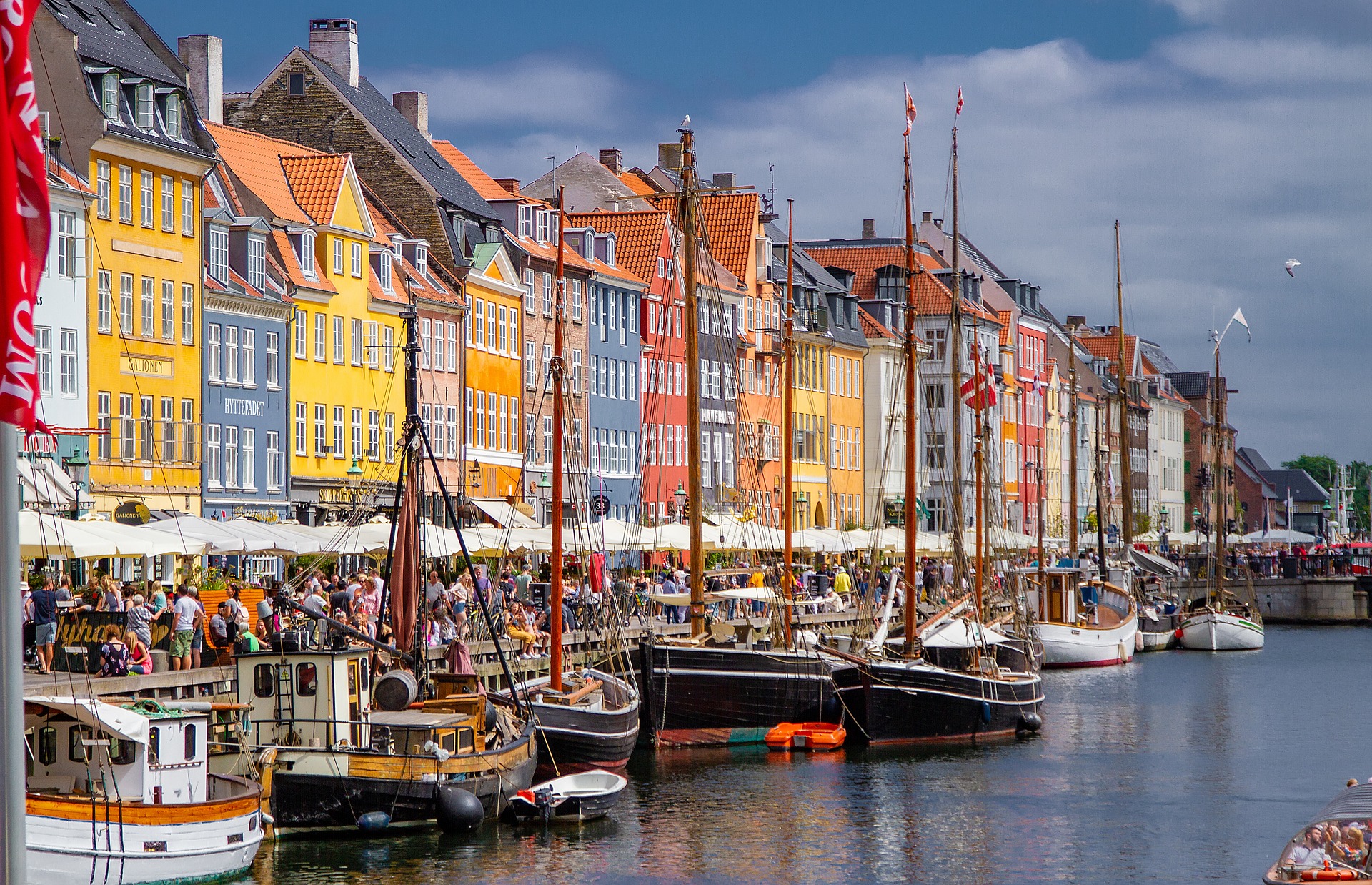

A new urban model is emerging worldwide, pointing the way to a post-carbon economy and society.
By Peter Plastrik and John ClevelandIssue 11 – Spring 2019 pages 22 – 27
Tags: cities • sustainability • innovation
Introduction
A new urban model is emerging worldwide – transforming the way cities design and use physical space, generate economic wealth, consume and dispose of resources, exploit and sustain the natural ecosystems they need, and prepare for the future. This emerging new urban paradigm has profound implications for players who care about and depend on the design of a city’s built infrastructure – including architects, engineers, builders, real estate developers, and office building tenants.
The model is upending the pillars on which our modern cities were built. It is most evident in several dozen cities, half of them in the United States, that are widely regarded as leaders in making extraordinary efforts to prevent global warming and protect themselves from climate turbulence.
These pioneering cities—we call them “urban climate innovation laboratories”—are trying, in just a few decades, to eliminate fossil fuels from their immense, complex systems of energy supply, transportation, buildings, and waste management. Just as systematically and rapidly, they are preparing their built infrastructures, ecosystems, economies, and residents to handle the grave impacts of extreme storms, rainfall, heat, drought, and rising seas—conditions already experienced by many cities and projected to get much, much worse.
The city as innovation lab
A city innovation lab isn’t a facility with highly controlled conditions, high-tech equipment, and scientists in white coats. The laboratory is the entire city, the complex, real urban world with its messy swarms of businesses, governments, and organizations; urban systems; ideas, interests, and politics; built infrastructure, natural ecosystems, economic sectors; and, of course, all manner of people and groupings.
These city labs exist on every populated continent, but have concentrated mostly in the U.S., Canada, China, western and northern Europe, Australia, and Japan. Most are well-known global cities, including Austin, Berlin, Boston, Copenhagen, London, Minneapolis, New York City, Oslo, Paris, Portland, Rotterdam, San Francisco, Seattle, Shanghai, Singapore, Stockholm, Sydney, Toronto, Vancouver, and Washington, D.C. Some are smaller, high-spirited cities: Boulder, Colorado, and Melbourne, Australia. Several—Cape Town, Mexico City, and Rio de Janeiro—are stepping energetically onto the world climate stage.
These cities are innovating aggressively and radically—by developing and implementing experimental projects, tackling entire urban systems, and reweaving the physical and cultural fabric of the entire city. Their numerous innovations contain a set of profound ideas that are changing the city’s wealth, metabolism, ecology, and identity.
These ideas contain the seeds of a new urban paradigm that is reshaping what people think a city can and should become. They introduce new ways for cities to compete successfully in a global 21st-century economy that is shifting to renewable energy. They herald new ways for cities to more efficiently use the vast quantities of energy and materials they need. They announce new ways for cities to value and obtain the benefits their wetlands, forestlands, open space, and other ecosystems provide. They signal new ways for cities to develop the social and physical adaptability needed to anticipate and prepare for uncertain future conditions.
Many of these ideas have been hovering off-stage, even for decades, looking for traction in cities. They were incubated within conceptual frameworks for sustainable development, environmental services, eco-efficiency, urban metabolism, and New Urbanism, or the urban agendas of UN-Habitat and the Club of Rome’s Earth Charter, or thought-leader formulations such as the “economy of cities” revealed by Jane Jacobs, the Cradle to Cradle™ principles of designer William McDonough, the “biophilic urbanism” of professor Timothy Beatley, or the Third Industrial Revolution economic vision of Jeremy Rifkin.
Now they are being moved onto the world’s urban stage by leading cities responding to the imperatives of climate change. They are spreading to other cities, carried through robust global networks that share information, support innovation adoption, and collaborate on further experimentation. At the same time, the mounting “climate smart” requirements of consumers, corporations, investors, professions, and state and national levels of government are forming enabling conditions that accelerate and globalize the trajectory of this urban evolution.
Since cities were invented some 6,000 years ago, they have often evolved fundamentally in response to war and conquest, trade and technologies, and earthquakes and other natural disasters, as well as demographic shifts, social reforms, and political revolutions. This time climate change is driving a full-scale evolution.
The new urban model is still in an early stage of emergence. Its elements have not yet been fully defined and assembled into a coherent practice by cities. It has not yet locked in as the comprehensive new way of doing business in cities, and it faces considerable obstacles. The fossil-fuel sector continues strenuous political resistance to sweeping changes and many national and state-level governments have failed to pursue sensible policies. Cities have limited control over many factors needed to implement radical innovations.
Innovation by cities is an age-old phenomenon. The experiments of ancient cities produced profound and enduring innovations: markets, democracy, libraries, bureaucracy, universities, and writing. Cities “have been engines of innovation since Plato and Socrates bickered in an Athenian marketplace,” notes urban economist Edward Glaeser. “The streets of Florence gave us the Renaissance, and the streets of Birmingham gave us the Industrial Revolution.”[i]
But cities are more than a platform for innovation; they, themselves, are an innovation. Born out of experimentation thousands of years ago, they are a great and sustained invention that reveals, realizes, and refines the collaborative potential of our species.
Why Cities matter more than ever
The City is more important than ever. When the modern city began to develop around 1800, there were few large cities – only about 3 percent of the world’s one billion people lived in cities. Just a few cities – London, Beijing, Tokyo (known then as Edo), Baghdad, and Istanbul among them – had ever contained as many as one million residents.[ii] In North America, only Philadelphia held more than 40,000 people. When Britain invaded New York City in 1776, its force of 32,000 soldiers outnumbered the city’s inhabitants.
Now, though, 3.9 billion people live in cities, more than half the world’s population; and millions more arrive every month by birth or migration from rural areas and small towns, in search of economic advancement or personal development. In the United States, about 300 cities each have 100,000 or more residents. Worldwide, more than 500 cities contain at least one million people and there are thirty-one “megacities” with more than ten million people each.[iii]…
Please login to read the full article
Unlock over 1000 articles, book reviews and more…