Blog
How media architecture is reshaping the future of workplace design
Share this article

Advances in technology and workplace design are making it possible to create workplaces that promote learning, discovery, social interaction, and engagement.
Emily WebsterOctober 2019
Tags: architecture • digital media • engagement• media architecture• workplace design
Note:
The Work&Place Editorial Advisory Board applauds this article as one of the eight best articles we published in 2019. We recommend it highly for its clarity and its innovative description of how new media technologies can transform the workplace experience.
For a brief overview of the ideas and case studies presented in the article below, begin with this brief conversation between author Emily Webster and Jim Ware, Managing Editor of Work&Place:
The Article:
In today’s digital world people are treated to dynamic, interactive experiences in public spaces ranging from museums to parks to retail outlets. It is no wonder that office professionals have come to expect and prefer similarly engaging workspaces, especially those that weave together physical and digital elements to create innovative, immersive environments and transformational workplace design.
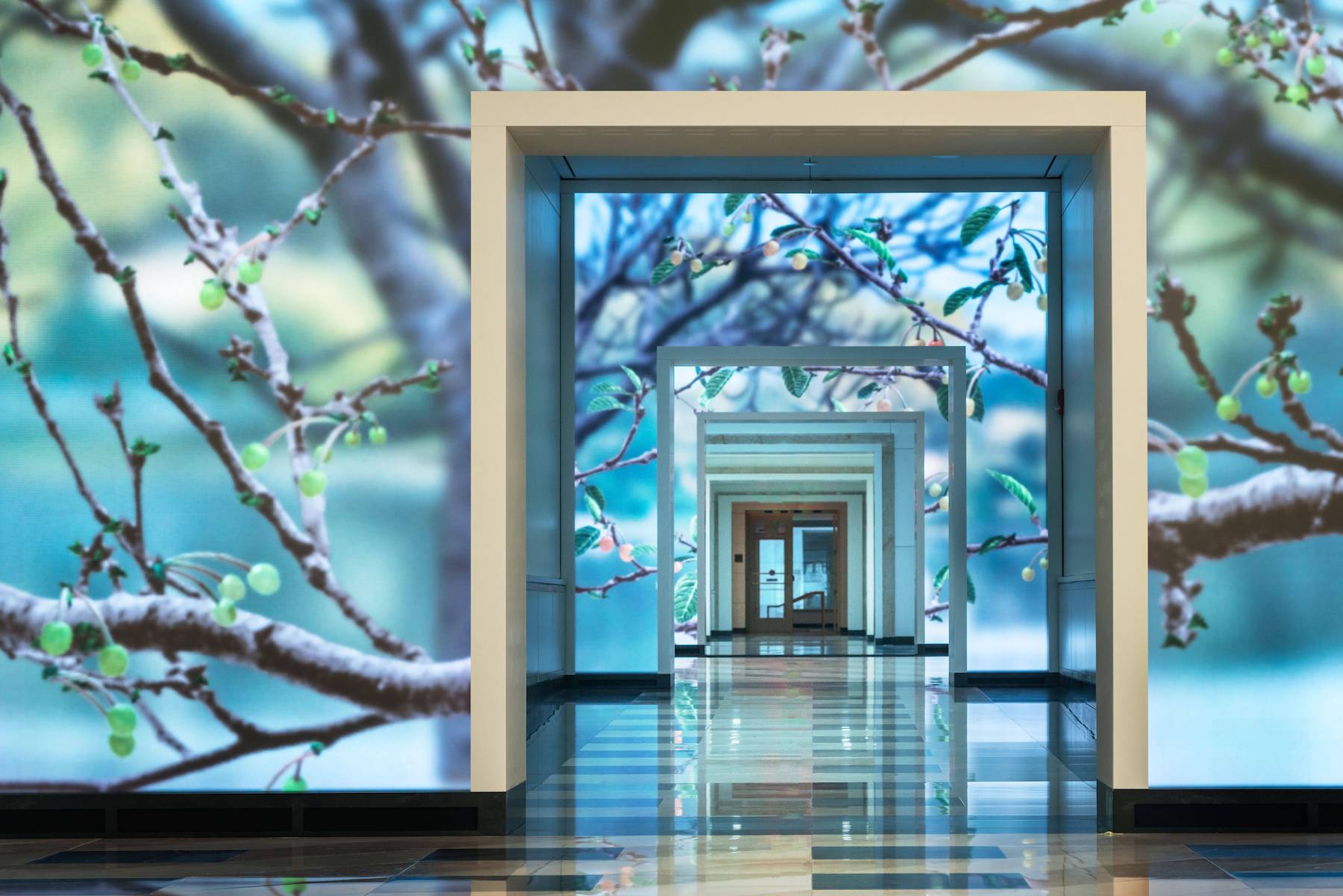
More and more companies are meeting this demand through the emerging field of media architecture, which involves seamlessly integrating digital media – including video, lighting, and audio – into the built environment. Sweeping advances in technology and spatial workplace design have made it possible – and affordable to do so.
Since media architecture is bespoke and site-specific as no two buildings or workplaces are exactly alike, the costs of projects can range from US$1.5 million to US$10 million. The impact and results, however, are significant and long-term. Workplaces are transformed into experiences, bringing a company’s mission to life while promoting learning, discovery, social interaction, and engagement. Commercial real estate projects also typically see higher leasing and resale prices.
This welcome development corresponds with an ever-growing body of research suggesting that being exposed to generic, monotone environments day after day can lead to boredom, unhappiness, and, in extreme cases, physical distress. [i]
Since media architecture incorporates workplace design elements that can be curated and customized to match the flow and tempo of a space and its inhabitants, it can play a critical role in helping employees feel refreshed and recharged by offering an ever-evolving workspace that reflects their daily rhythms.
To be clear, we are not talking about screens stuck on a wall simply displaying cable television and advertisements. Media architecture feels holistically integrated into the environment, creating a dynamic space that invites both employees and visitors to stay continually engaged.
Exemplary media architecture places people at the center of workplace design by focusing on three objectives:
Tapping into the workplace’s potential to communicate the company’s brand and values;
Showcasing dynamic, interactive art that invigorates employees and passersby; and
Promoting learning and social interaction….
Please login to read the full article
Unlock over 1000 articles, book reviews and more…