Blog
Harnessing the power of alignment to create value and sustained performance
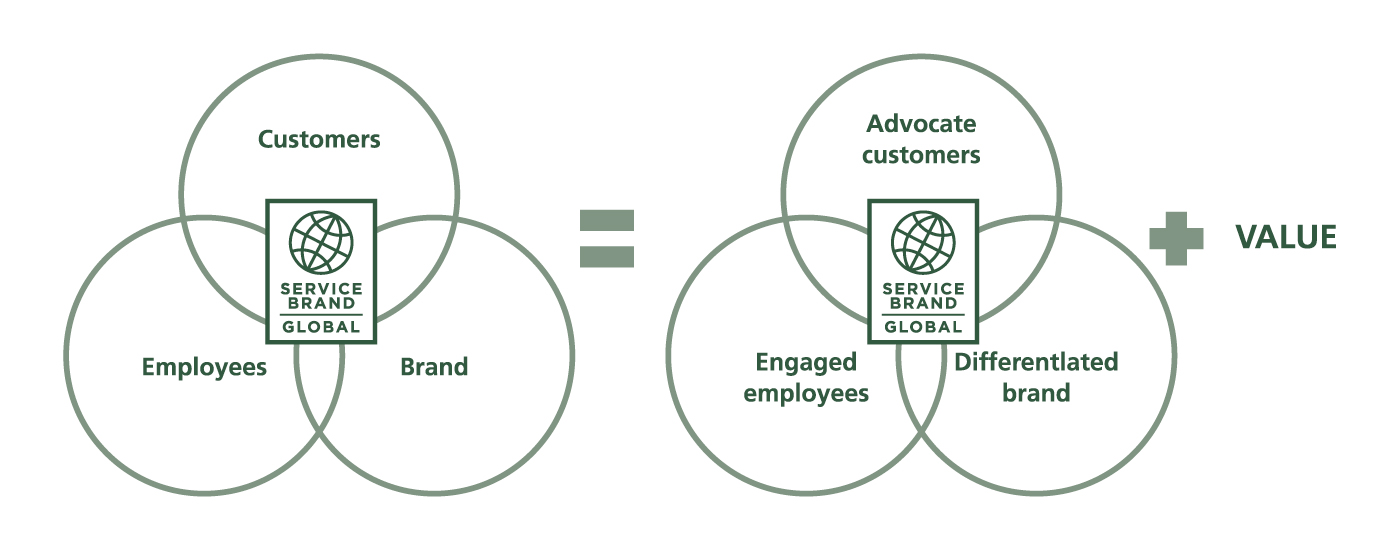

Putting values at the centre of everything an organization does is the starting point to create a strong and authentic brand
Alan Williams
VALUES • BRAND • ORGANISATIONAL CULTURE • BUSINESS PROCESSES
Harnessing the power of alignment to create value and sustained performance
In my first article for Work&Placei I posed the question of whether workplace directors can deliver a customer experience like a ‘service brand’. A clear understanding of the organisation’s purpose and values is the fundamental starting point and provides the foundation for everything that follows.
That was in 2013. During the intervening five years, the v-word has caught the imagination, and values are even more front of the mind all over the world for a wide range of people, from political leaders to high profile celebrities and a variety in between, all seeking to win support for their various causes.
You might have noticed how values took centre stage for one of the world’s biggest advertising events, the Super Bowl.ii The inaugural World Values Day took place in 2016, and people in more than one hundred countries took part last October.
Putting values at the centre of everything an organization does is the starting point to create a strong and authentic brand. This strategy is particularly relevant for service organisations where people are a core element of their offer. But it needs to be done in practice rather than as some sort of lip-service PR campaign – witness the reaction to the McDonald’s marketing initiative for International Women’s Dayiii.
The core concept is a simple one: the holistic development and implementation of three areas of strategy (brand identity, employee engagement and customer experience).
Defining a service brand
SERVICEBRAND® is a term invented by the author to refer to an organisation for which customer service is a fundamental and evident part of their offer. Examples of traditional service brands are hotels, airlines, law firms and financial advisors where it is very clear that a service is being provided and people are an important factor. A factory producing hammers is not a service brand. However, in recent years, businesses that in the past might have been considered product-based have become service brands.
There is evidence of this in the automotive, technology, and mobile phone sectors where differentiation based on product alone is a challenge, so service becomes the focus. The approach is also relevant in the public sector, e.g. hospitals or borough Councils, in the third sector and for membership organisations and internal business functions such as Human Resources, Finance, Workplace, and FM.
Much has been written in the workplace and FM sector over the years about integrator models, vested models, ecosystems, and the potential relationship between workplace, FM, real estate, IT and HR.
It is clear that workplace and FM has its own individual characteristics and complexities, and yet the service brand approach has been applied successfully in single-site, regional, and global portfolios over the last fifteen years, delivering remarkable business impact and receiving industry recognition. The overarching concept is a combination of just two principles:
Design the service delivery from the customer backwards instead of from “expert” silos forwards; and
Consider all functions, organisations and people who are involved in the service delivery as One Team.
The core concept is a simple one: the holistic development and implementation of three areas of strategy (brand identity, employee engagement and customer experience) in an integrated way so that consistency and credibility is achieved at all touch points of an organisation (inside and out) and, critically, is then sustained over a period of time.
The service brand can be developed by the coordination and alignment of the three areas, and additional value is created that could take the form of increased profit, increased customer satisfaction and advocacy, improved employee engagement and retention, improved brand recognition and reputation. In short, values-driven service for sustained performance.
The approach is based on the following fundamentals:…
Please login to read the full article
Unlock over 1000 articles, book reviews and more…