Blog
The missing piece of the workplace design and management conundrum?
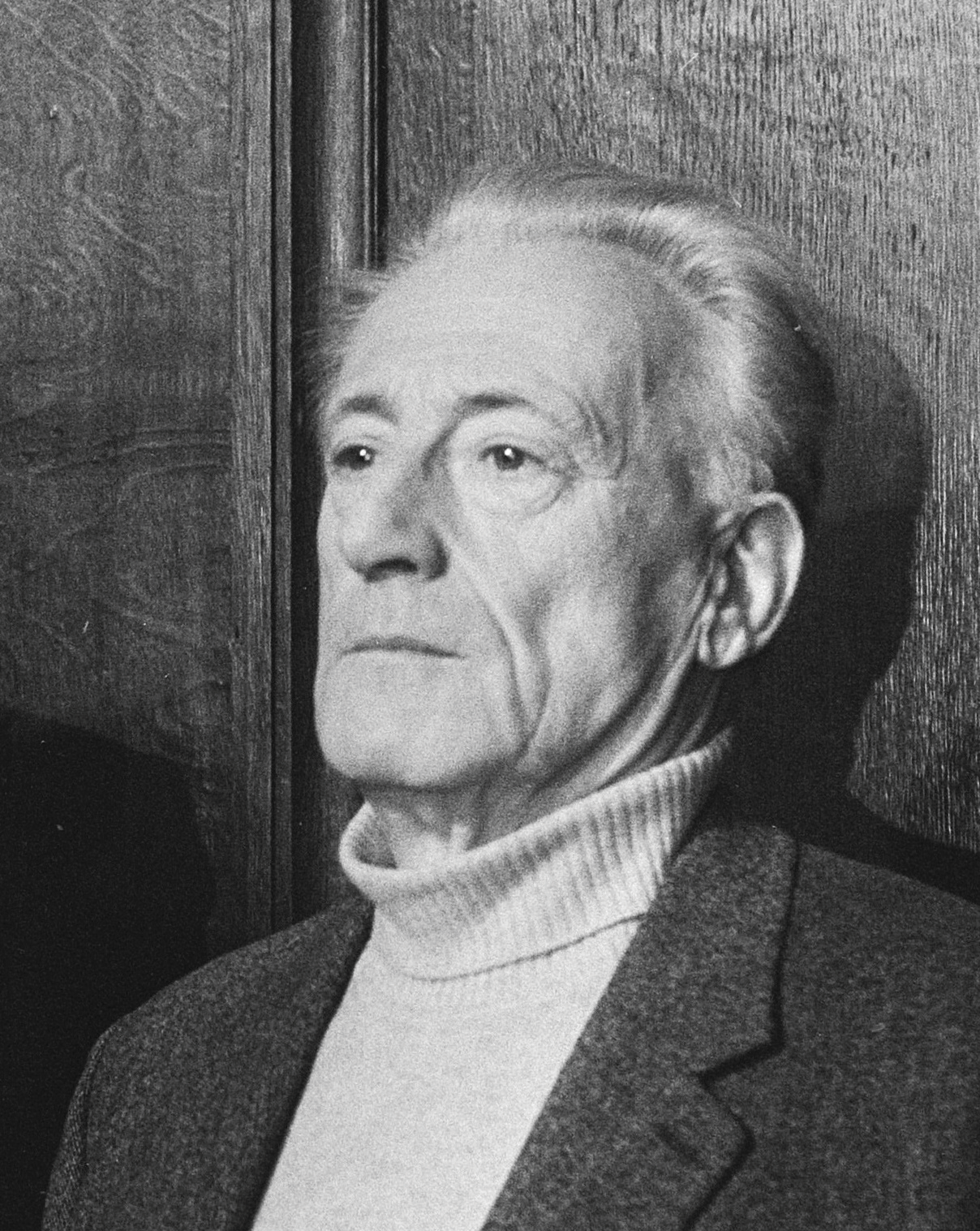

Could a comparatively obscure French Marxist philosopher prove to be the key that unlocks the great puzzle of workplace design and management?
By Ian Ellison
Work&Place Journal Edition 7 – April 2016 Pages 06-11
Tags: workplace design • facilities management • human resources
I last wrote for Work&Place issues 3 and 4, spanning the IFMA Foundation Workplace Summit of summer 2014. It felt like an optimistic time for facilities management and the workspace and workplace design sectors. Heavyweights were asking questions about our organisational contribution, with thankfully less of the internally focused debate free hubris typical of much of the industry narrative. The newly announced (and now evidently historical) collaboration between BIFM and CIPD was in full swing, endorsed by social media savvy Twitterati under The Workplace Conversation banner.
Finally, I thought, we seemed to be talking less about space as a commodity and more about people. Melissa Marsh of Plastarc captured it at the Summit as she evidenced co- working principles: less “managing facilities” and more “enabling communities”. It felt like some were starting to realise the fundamental qualitative difference between workspace and workplace: the role of culture.
This was music to my ears. At the time I was preparing my doctoral research data. I was interested in what matters to people about workspace, from both provider and user perspectives. As I explored literature ranging far beyond FM and the built environment I developed my own constellation of spatial knowledge, and particularly which perspectives associated with each other. A doctoral journey seems to be as much about understanding the politics of knowledge production as the knowledge itself. For all our seemingly justified reasons for workspace change, I was surrounded by intellectual and often philosophically grounded arguments to the contrary. This wasn’t change resistance to be overcome or unfrozen using the simple linear change models we love to apply. It was a completely different and often unshakeable world view. It is no coincidence that academia is arguably one of the hardest workspace arenas to innovate within, for all manner of political and cultural reasons.
The spatial turn
The easiest way to explain this is to introduce what has become known as the spatial turn. This is where a discipline realises that all human encounters happen in and because of some sort of space, essentially underlining its significance as well as that of workplace design and management. Space is therefore social. Space is also therefore unavoidably political. There will always be positions with and without power. Winston Churchill wasn’t far off when he said “we shape our dwellings, and afterwards our dwellings shape us” in 1944, following the bombing of the House of Commons during the blitz. Rosen et al (1990,p.71) echoed Anthony Giddens’ famous Structuration Theory in built terms, explaining “the spatial characteristics of buildings … are both medium and outcome of actions they recursively organize”. FM pioneer George Cairns (2002, p.818) also attempted to alert us to the industry relevance of this conundrum, to little avail: “the physical and social environments contain one another, frame one another and influence the development of one another – but they are not as one”, implying an interdependent socio-spatial relationship which is far from objective or deterministic.
As I grappled with this new knowledge two important things became clear. First, the spatial turn continues to influence different academic disciplines, typically those more sociologically inclined. There is some evidence of it in areas of organisation theory more critical of contemporary business practices, but this is removed from the knowledge FM typically aligns with. Alarmingly, the industry responsible for workspace seems almost entirely unaware of the spatial turn. Second, there was one intellectual figure consistently associated with it: Henri Lefebvre. Tricky name, tricksy by nature. He deserves proper pronunciation though, so have a practice now: Onree Lefev shouldn’t be too far off.
Henri Lefebvre and the production of space
Henri Lefebvre was a French Marxist Philosopher who lived from 1901 to 1991. There are a handful of scholars who have given him their full attention. Andy Merrifield’s (2006) critical introduction is personally the most accessible and entertaining, if you want to read more. To those who know, he plays a lamentable bit part to other acknowledged philosophical giants of the 20th century. Yet his fundamentally active engagement with everyday life and the progression of knowledge saw him debating with the Surrealists and Dadaists, influencing Sartre’s work, driving a Parisian taxi, joining the French resistance during the Second World War, perpetually wrestling with the French Communist Party, and, as professor at various universities, a key intellectual godfather of the 1968 student generation. Lefebvre’s output was prolific. At least 66 books, 25 of which were penned after his 65th birthday.
The problem with Lefebvre is he is as challenging to read and work with as I suspect he was in person. Merrifield says Lefebvre “blasted out his books jerkily, hastily, nervously” (2006,p.xxii), resulting in “frequently fascinating, though invariably unsystematic and perplexing” work (1995,p.295). This isn’t far off the mark. His ideas sought to humanise Marxism and de-scholarize philosophy, demonstrating its everyday, lived relevance. Yet they are presented so esoterically as to be at times practically impenetrable. Furthermore, whilst he maintained grand narratives – volume one of “Critique of Everyday Life” was penned in 1947, volume three in 1981 – he constantly drove forwards, reworking and reinventing as he went.
In 1974 Lefebvre penned “La production de l’espace”. Academic politics at the time meant it was ambivalently received and marginalised. Consequently, it didn’t undergo English translation as “The production of space” (POS) until 1991, when certain geographers began championing its hitherto under-acknowledged significance, and the spatial turn gathered momentum. In POS, Lefebvre captures the essence of the spatial turn in one deceptively simple sentence: “(social) space is a (social) product” (1991,p.26) and consequently focuses our attention on the inherently political production of space, rather than space itself.
The spatial triad
Ok, this next bit is pretty philosophical. This is about as succinct as I can offer. It’s certainly taken a lot of pondering of my own to become conversant with it. Remember, Lefebvre was aiming for a holistic approach to consider anything in spatial terms, from untouched mountain villages to urban regeneration projects; from hedonistic festivals to commercialised package holidays. By shifting attention from the material workspace per se, to our interaction with it and how we all produce space in different, mutually constitutive, interacting ways, we can begin to appreciate not just the rich diversity of experience, but the unfolding quotidian, everyday life of spatiality – the relationship between the social and the spatial. He determined that if space has physical, mental and social fields of distinction, it can therefore be known through three moments of production: the perceived, conceived and lived. This is the heart of Lefebvre’s conceptual tool, his spatial triad, which frustratingly he only sketches, inviting active application. Harriet Shortt, a scholar from UWE, provides an admirably succinct explanation from her own research which might help:
“Perceived space – spatial practices and how we move within space as part of daily routine; conceived space – how space is physically constructed as a materialization of power relations; and lived space – the symbolic, subjective experiences of those who use space”(2015, p.635).
We might even extend this, as Schmid (2014) does, to suggest the perceived, conceived and lived spaces imply the production of material goods, knowledge and meaning respectively. The crux is that these different moments exist concurrently, and to attempt to isolate them, or privilege one over the others can only ever lead to partial understanding. Lefebvre has strong opinions about how different disciplines have done this for their own benefit, and indeed continue to do so. Holistic expertise should not entertain blind spots.
Now, for any given spatial situation, these moments exist in interaction.This interaction might be in conflict, alliance or somewhere in-between.The result is what Merrifield (2000) calls the present spatial outcome.And noting Lefebvre’s political inclinations, some present spaces are more desirable than others.Another way to think about this is that with any space, there will always be what de Certeau (1984) termed strategies and tactics. Strategies are the conceived intentions of providers – for example, how various agile workspace elements need to work for organisations to benefit.Tactics are the lived actions of users – how different people respond to agile solutions and behave within the workspace accordingly.The point is that wherever there are conceived strategies, there will always be meaning-making, resulting in lived tactics playing out in perceived space.The imposition of particular controlling strategies by the dominant, triggers tactics from the dominated, in an attempt to transcend them. It is utterly inevitable. In this respect we are all spatial experts – but providers occupy various official roles on behalf of others, to varying degrees of success. Strategies and tactics can antagonise, or they can mutually benefit each other. Graffiti is a good example to think about here – what makes the distinction between vandalism and street art?
Making Lefebvre relevant
So am I convincing you Lefebvre is worth the effort? Is Lefebvre and his triad an esoteric aside for the intellectually inclined, or does it have real workspace significance, now and into the future? Well, we can use my own research findings here to address these questions. To recap, I asked both providers and users “what mattered to them about workspace?” I did this involving volunteer participants from two case-settings in London. One was a sole-organisational arrangement in a contemporary multi-tenancy property. The other was a collaborative work-setting aligned under an internationally franchised co-working brand. I sought to surface rich, emergent data using a novel research technique called participant-led photography. I recorded interviews based entirely on the photographs my volunteers had taken in response to my question, so the conversations inevitably ranged widely and freely….
Please login to read the full article
Unlock over 1000 articles, book reviews and more…